
Faciit – Case Study
Optimizing Customer Onboarding experience for FACIIT
Faciit uses Open Banking, Artificial Intelligence, Machine Learning and innovative approaches to rethink and capture creditworthiness for people with thin credit profiles or invisible to the UK financial system. I led the design team on this project aimed at creating financial possibilities for those who would struggle otherwise in the UK.
Role
Design lead, Customer onboarding
Team
3 developers, data analyst, 2 FACIIT stakeholders
Timeline
Went live August 2022
The problem
Onboarding not onboarding!
Filling onboarding forms for loan facilities is overwhelming, 70% of users don't complete the process, yet most of the information collected is necessary for loan decisions.
Goals
Fast and efficient
Make collecting consumer information fast and efficient.
Reduce drop-off
Significantly decrease onboarding drop-off across the funnel.
Enough to decide
Collect enough personal and financial data to inform loan decisions, no more, no less.
My role
I redesigned the onboarding process for new customers, collaborating with 3 developers, a data analyst and 2 FACIIT stakeholders. The updated platform went live in August 2022.
Stage 01
Research: talking to real users
I ran interviews with 4 current users. Three insights stood out: users don't see loan terms before completing the form so they lose interest; there's no expectation-setting on form length; and some information isn't needed for the initial decision, it can be collected before disbursement instead.
Stage 02
Redefine: what actually needs to be asked, and when
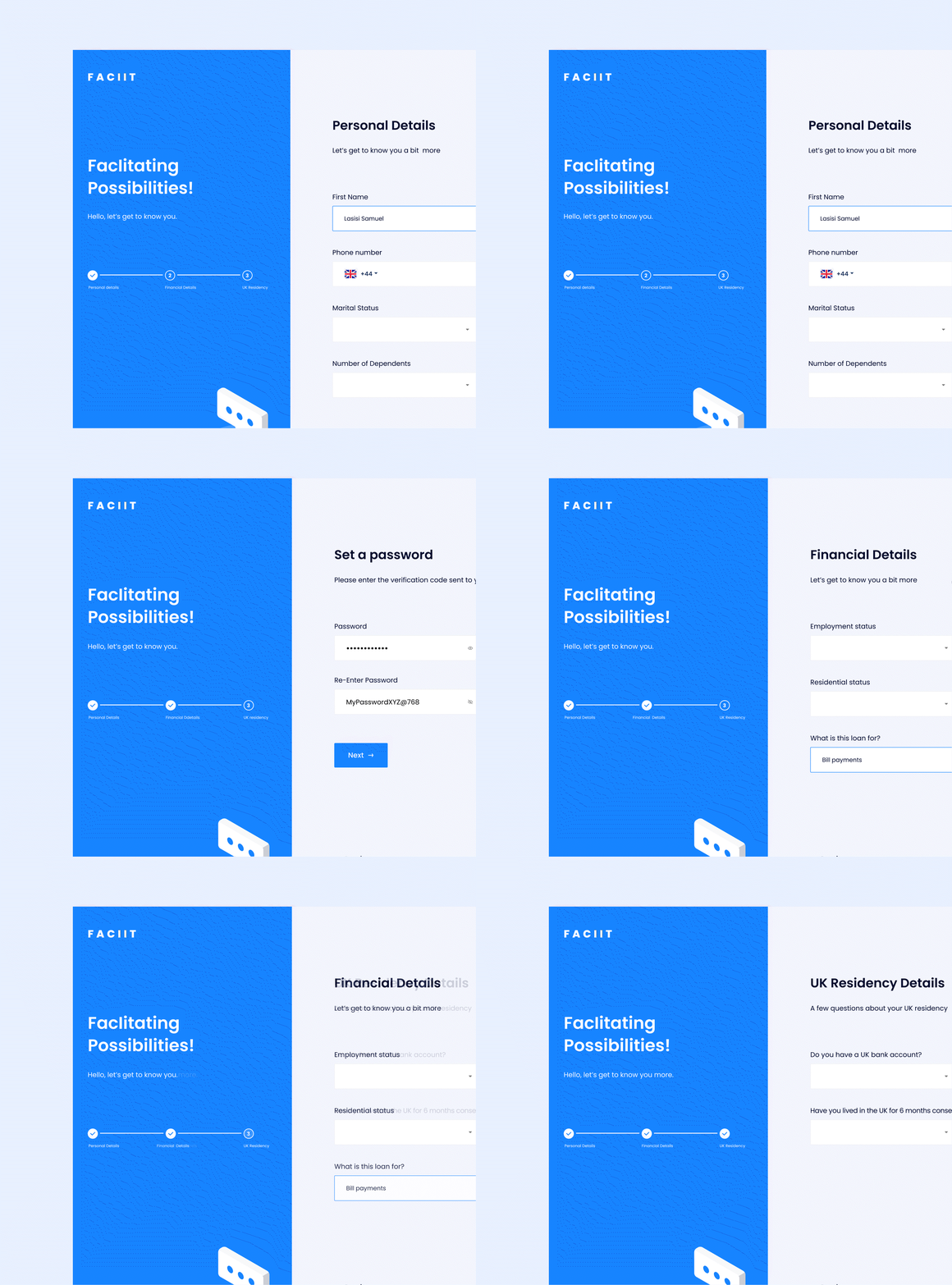
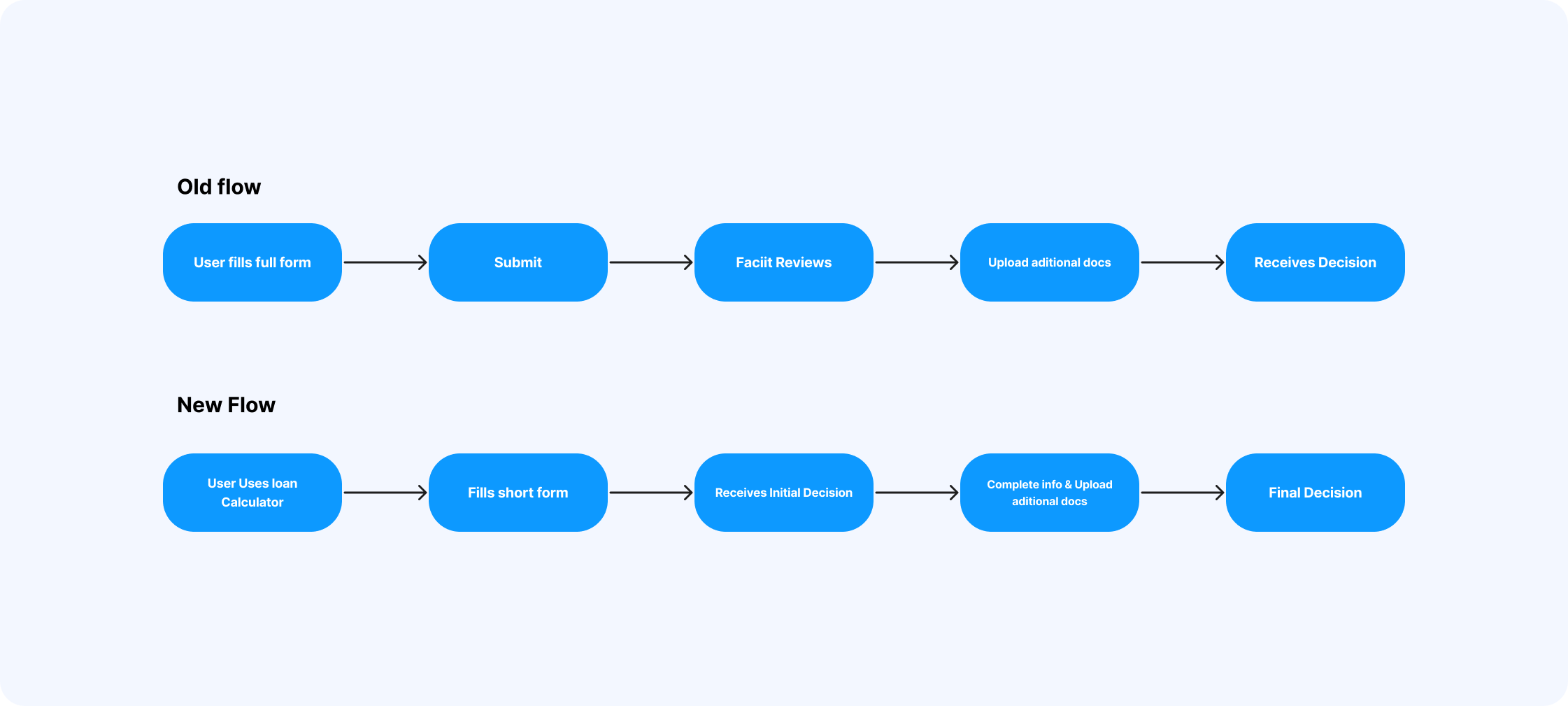
Rather than collect everything up front, I split the form: only information needed for the initial credit decision goes in the short form. Everything else moves to a post-offer step, right before disbursement.
Before → After
Before
A long, opaque form
19 questions across Personal > Financial > Loan > Residential, ~12 minutes to complete. Users then had to upload evidence on request and wait for an admin decision. Predictably high drop-off.
After
Loan calculator + short form
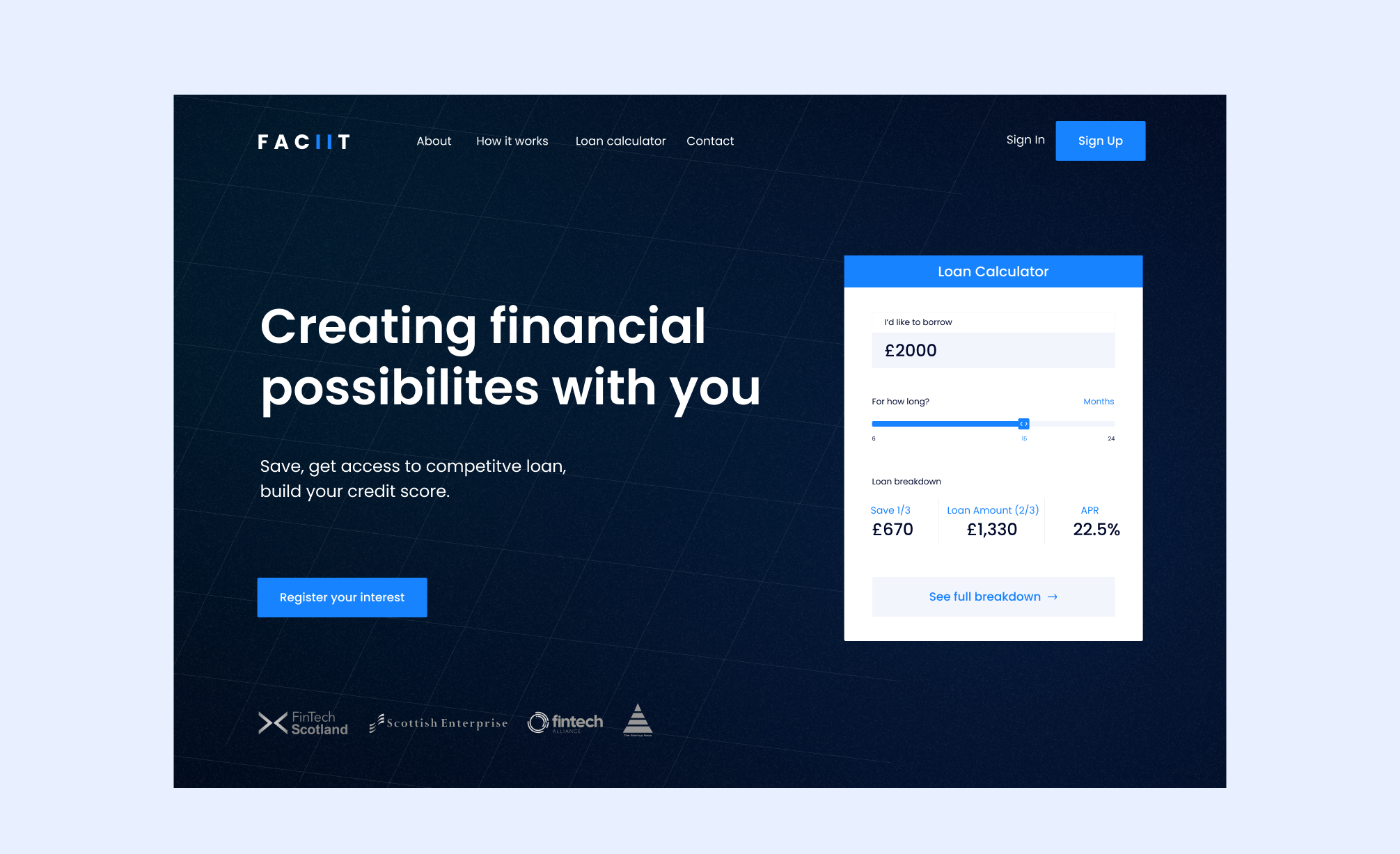
An interactive loan calculator UI auto-calculates monthly repayment, initial deposit and APR to set expectations. Only 7 personal/financial questions follow, ~4 minutes. After submission the user gets an admin offer, then completes remaining info and documents.
Stage 03
Redesign: the loan calculator and short form
The interactive loan calculator surfaces monthly repayment, initial deposit and APR the moment a user lands on the flow, setting expectations before any personal data is asked. The follow-on form drops to 7 questions and ~4 minutes.
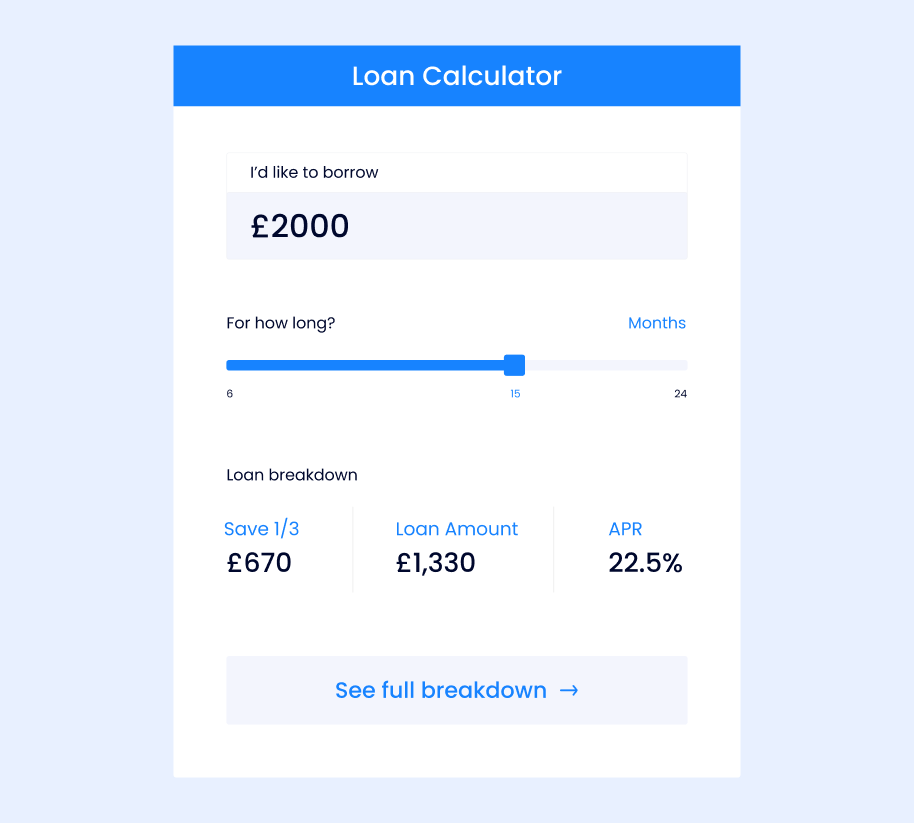
Design principle, Communicating expectations early. Users should clearly understand the terms surrounding their application. The loan calculator achieved exactly that.
Impact
Design impact, learnings and future thinking
Setting expectations early and asking only what was needed at the right moment turned onboarding from a drop-off funnel into a completion story, with fewer errors along the way.
34%
increase in onboarding success
6%
decrease in form errors
Future thinking and learnings
What this project taught me and where it goes next.
Expectation-setting is a feature
The calculator wasn't decoration, it was the single biggest driver of completion. Frame the outcome before asking for effort.
Ask at the right moment
Splitting the form by decision stage, pre-offer vs pre-disbursement, respected users' time without losing data.
Open Banking as a shortcut
Pulling verified financial data instead of asking for it manually is the next lever to shorten onboarding further.
Measure the funnel end-to-end
Track drop-off per question, not just per screen, the biggest wins are hidden at the field level.


