
WeMuve – Case Study
A cheaper, convenient alternative to traditional public transport in Nigeria
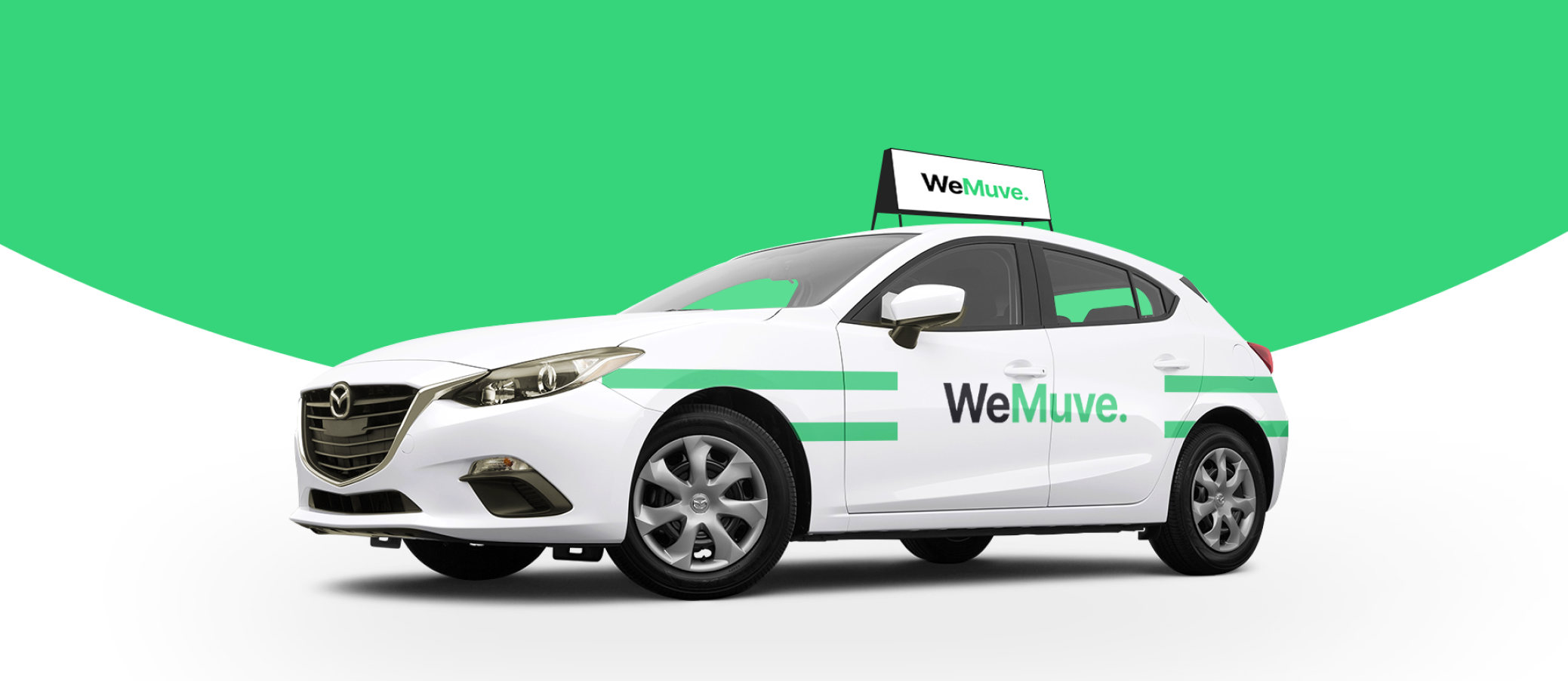
WeMuve is a carpooling solution that aims to connect drivers willing to share their vehicles with passengers looking for a convenient, fast and less stressful alternative to traditional public transport, all through a mobile application.
My role
UX Researcher, UX/Product Designer, Brand Designer
Methods
Qualitative research, user interviews, usability testing, UX design, UI design
Timeline
16 weeks (Aug 2021 – Dec 2021)
The problem
Population explosion = Transportation challenges
Transportation challenges grow with population in Nigerian megacities. Research shows Lagos commuters lose around 75% of their weekly working hours to traffic, a staggering cost to individuals and the economy.
8m+
daily commuters in megacities
75%
average work hours lost to traffic
60%
of registered vehicles are in the megacities
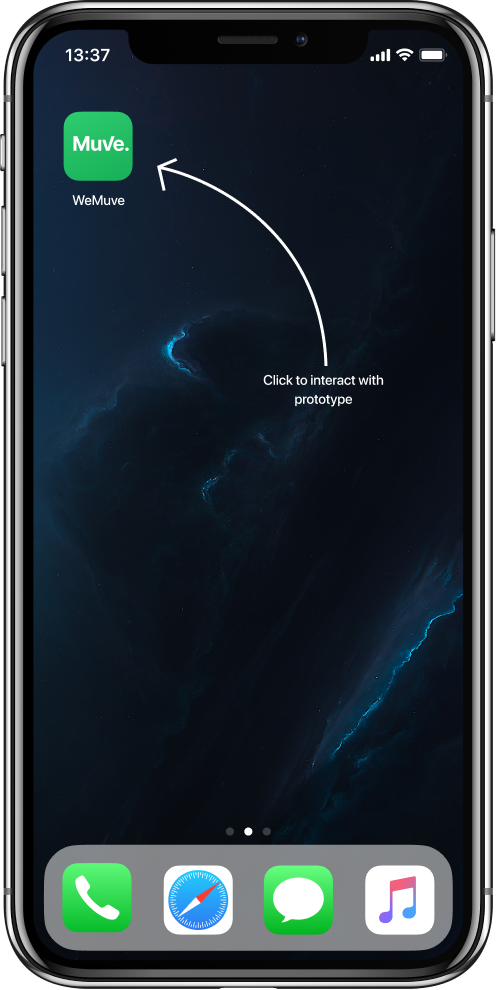
How can commuting be made easier for both car owners and passengers while ensuring safety and security?
The solution
Encouraging carpooling and ridesharing in mega cities
Roughly 60% of private vehicles in major Nigerian cities carry only one passenger. A safe, well-designed carpooling solution encourages stress-free transportation and could decrease the number of vehicles on the road by around 40%.


Stage 01
Research: how Lagosians actually move day to day
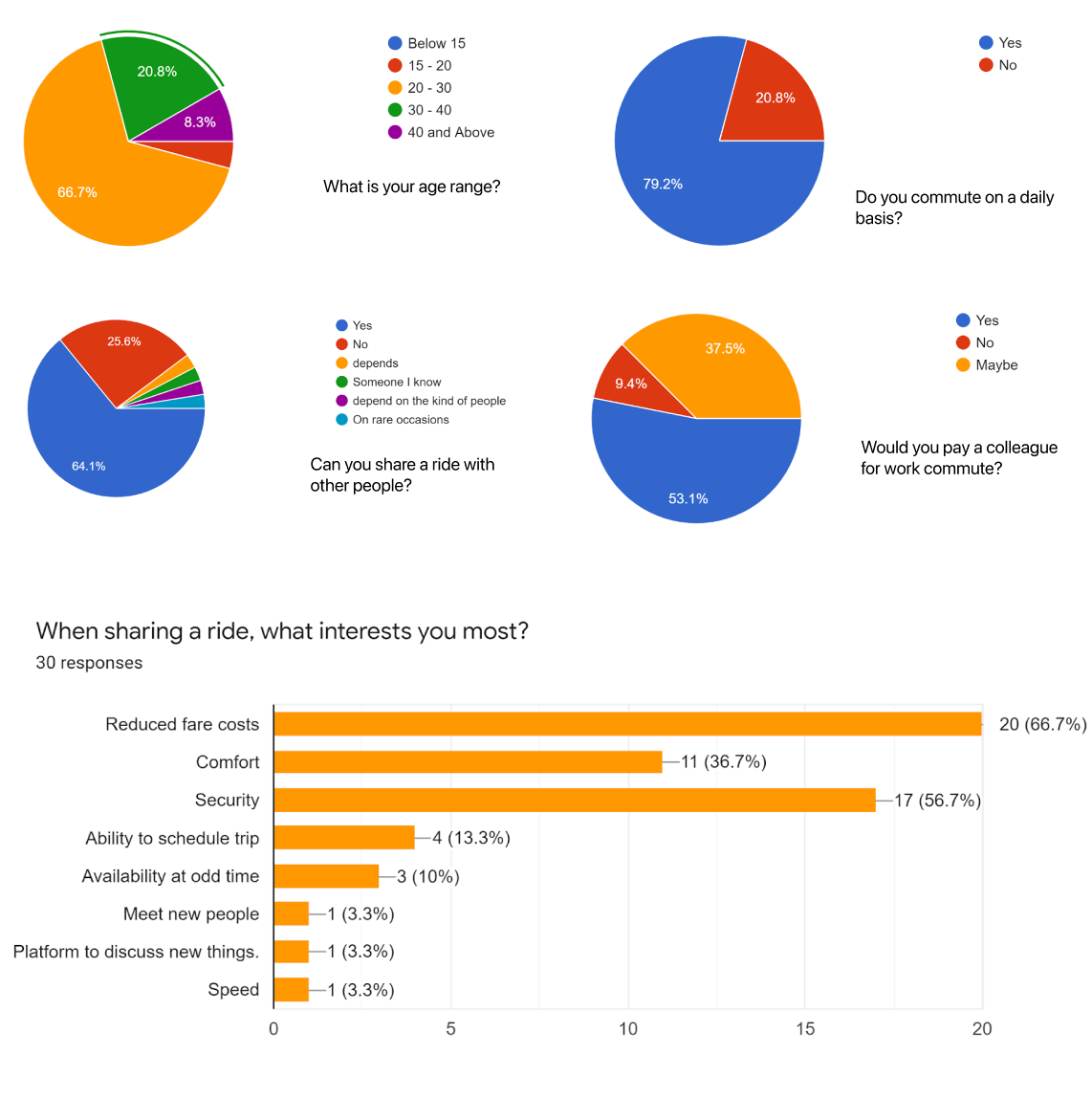
I interviewed users by gender, age, commute style and ride-hailing frequency to understand how Lagosians move day to day.

Insights
- Community transport situations are consistently poor
- Ride-hailing fares fluctuate unpredictably
- Long waits, especially at peak hours
- Users are willing to share rides if the process is secure
- Users are willing to pay colleagues for rides
- 85% have used ride-hailingat least once
- Most want to pay less for daily commutes
Stage 02
Redefine: personas, task flows and wireframes
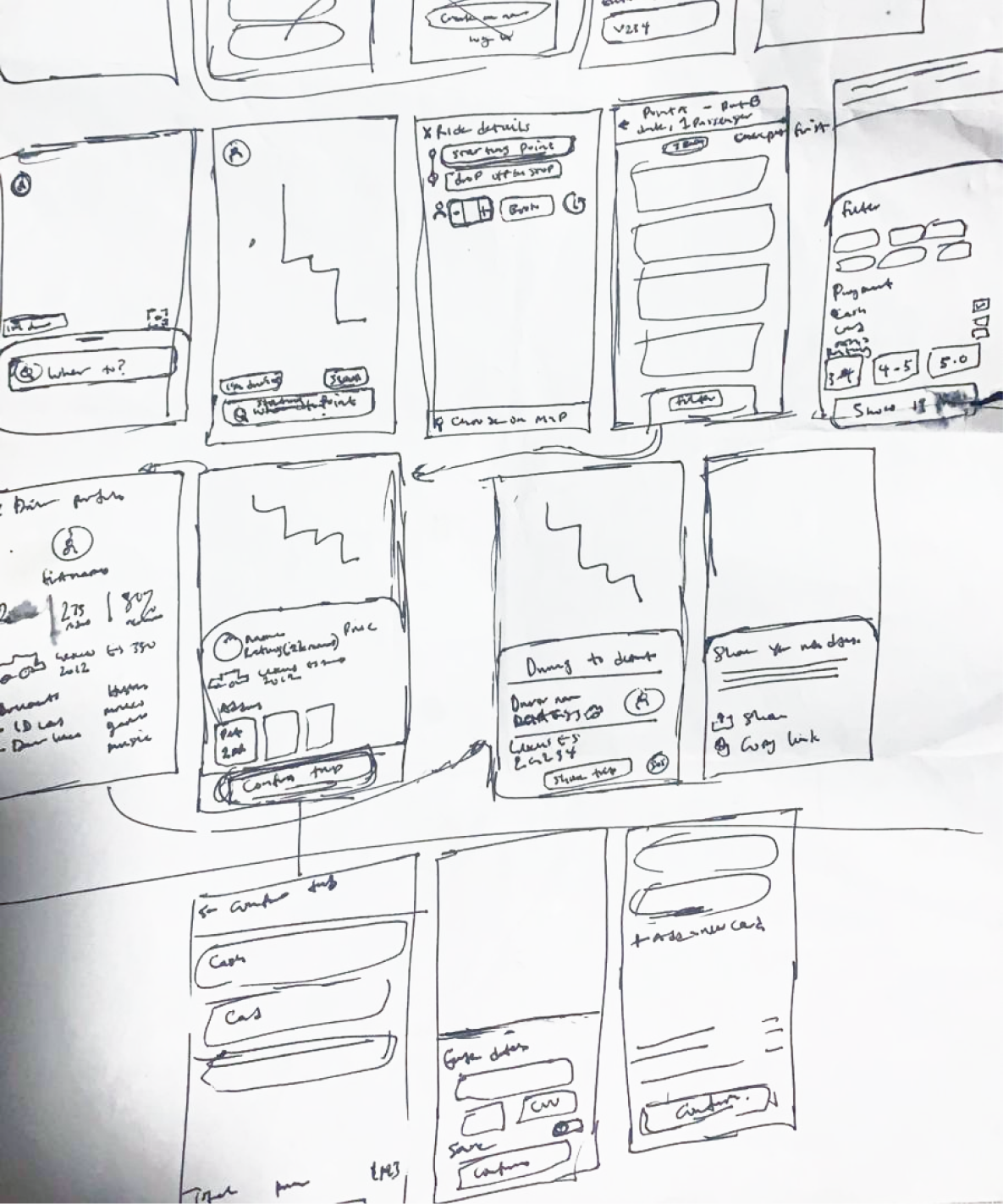
Two user personas guided design decisions across the product, one focused on the everyday commuter, one on the occasional cost-conscious traveller.
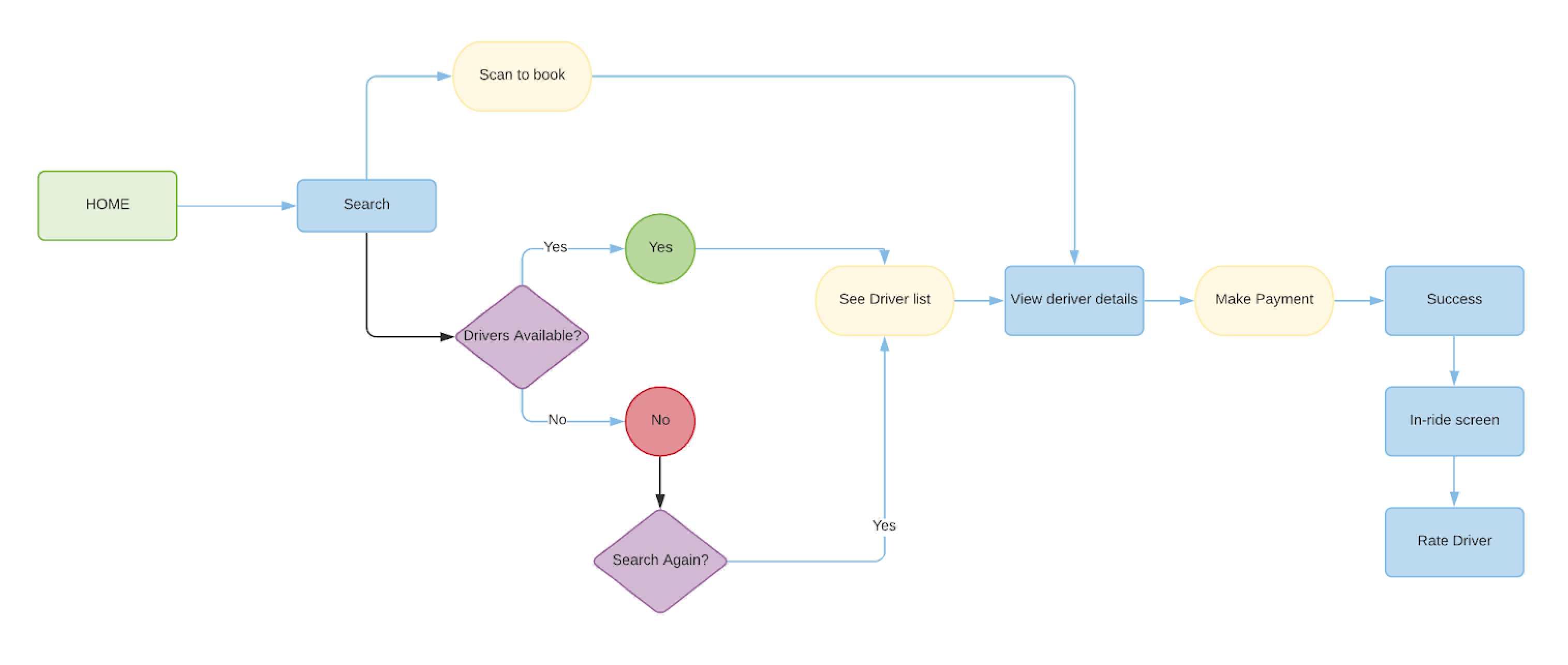
I built a simplified task flow for the 'Getting a ride' epic, and used wireframes to validate the flow and the visual elements before moving to hi-fi design.


Stage 03
Redesign: testing, iterations and safety-first features
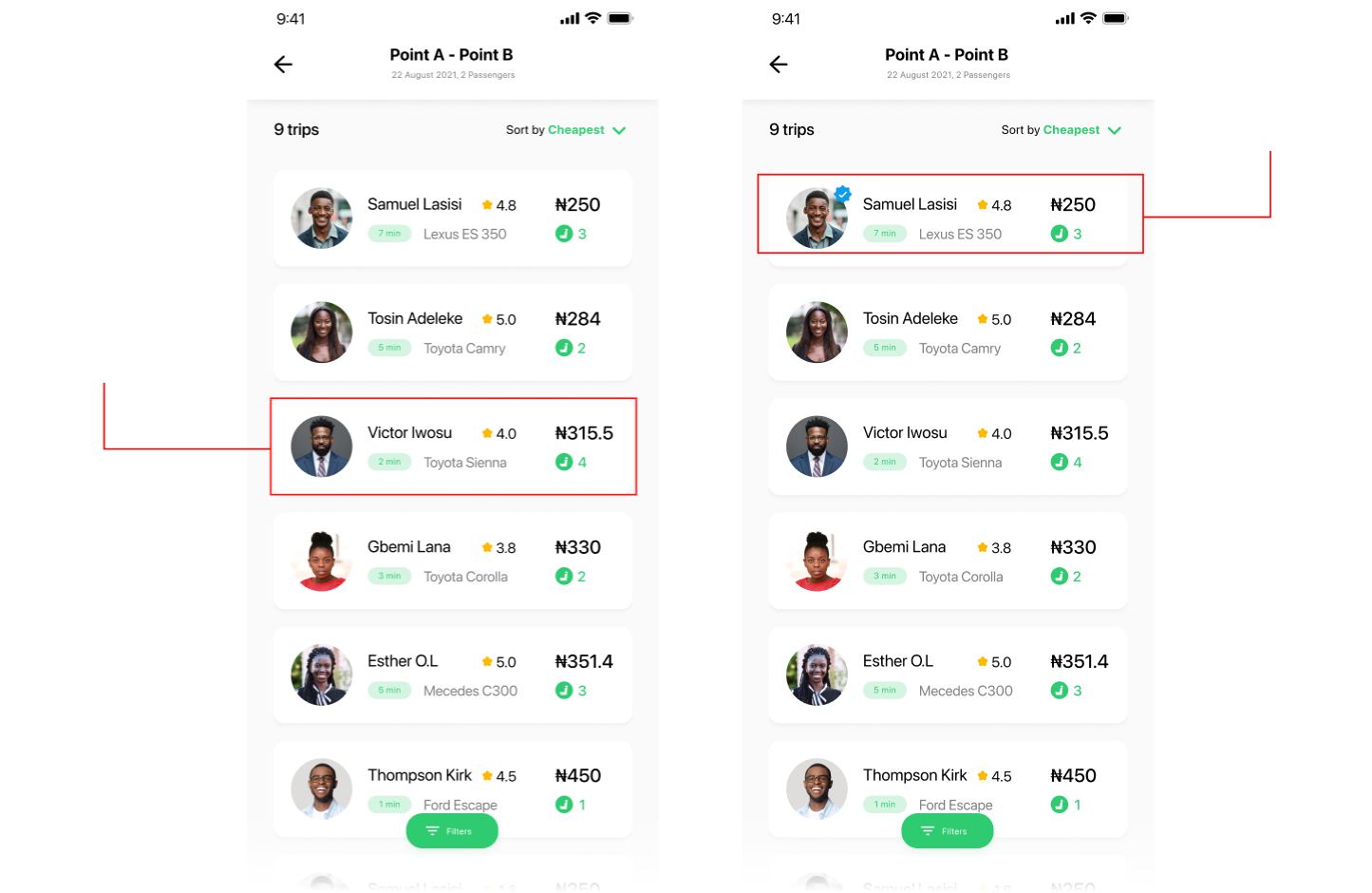
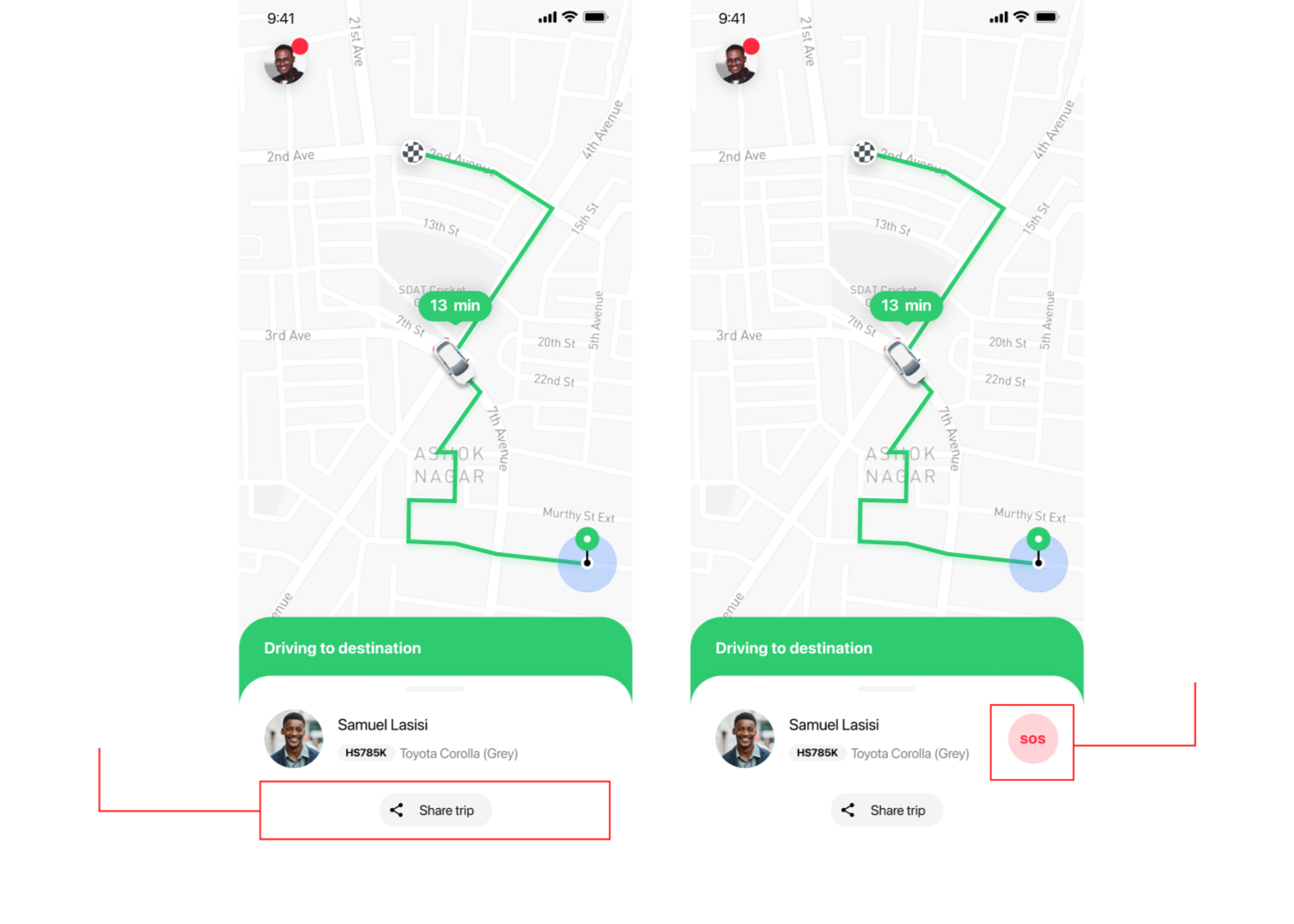
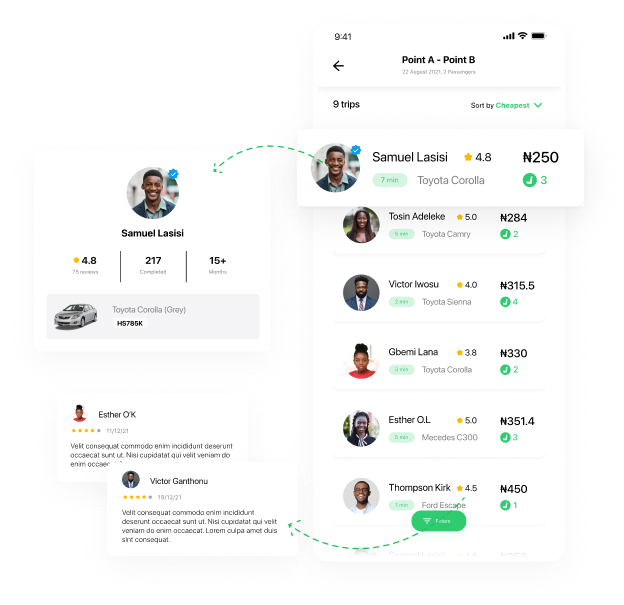
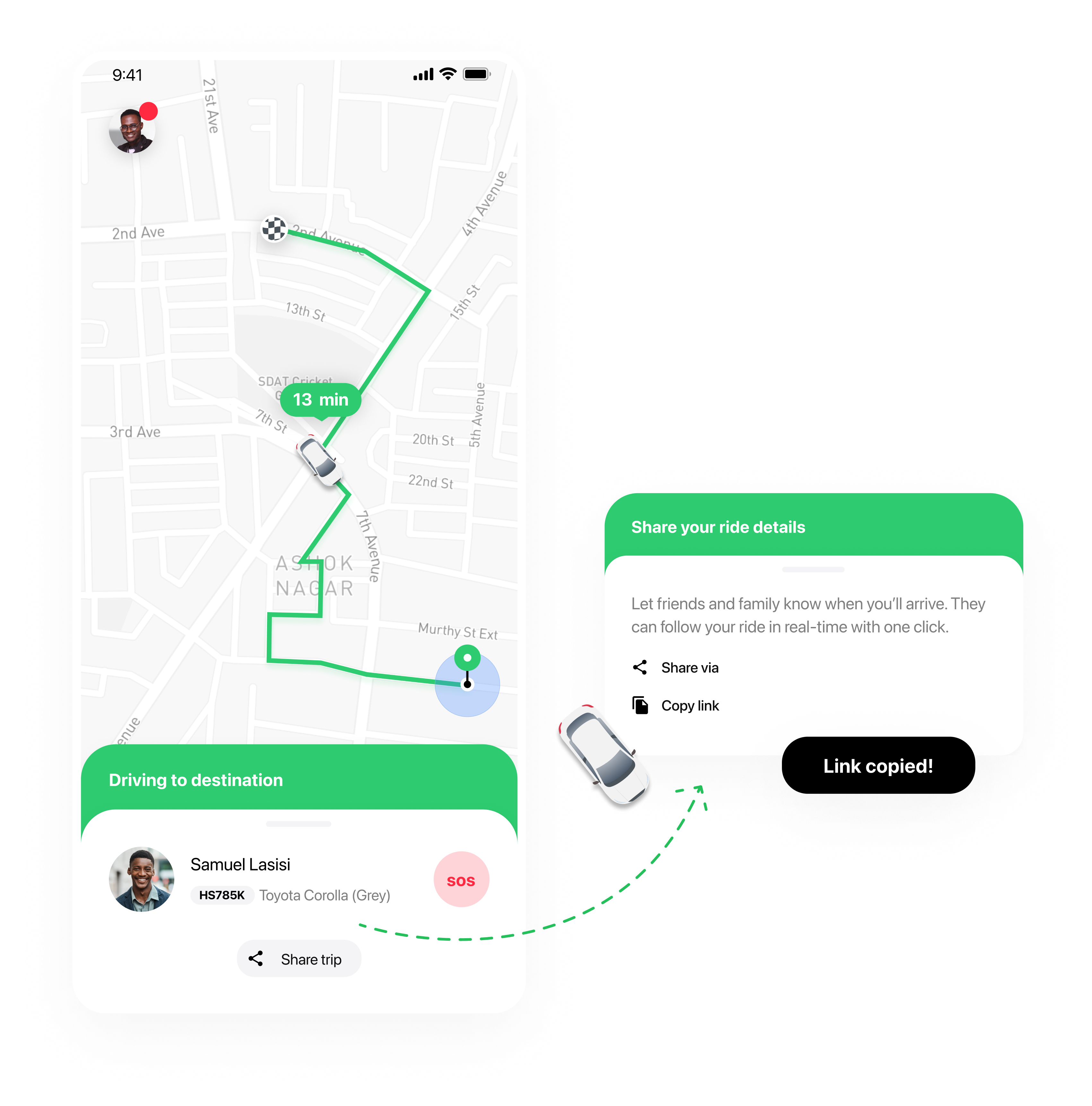
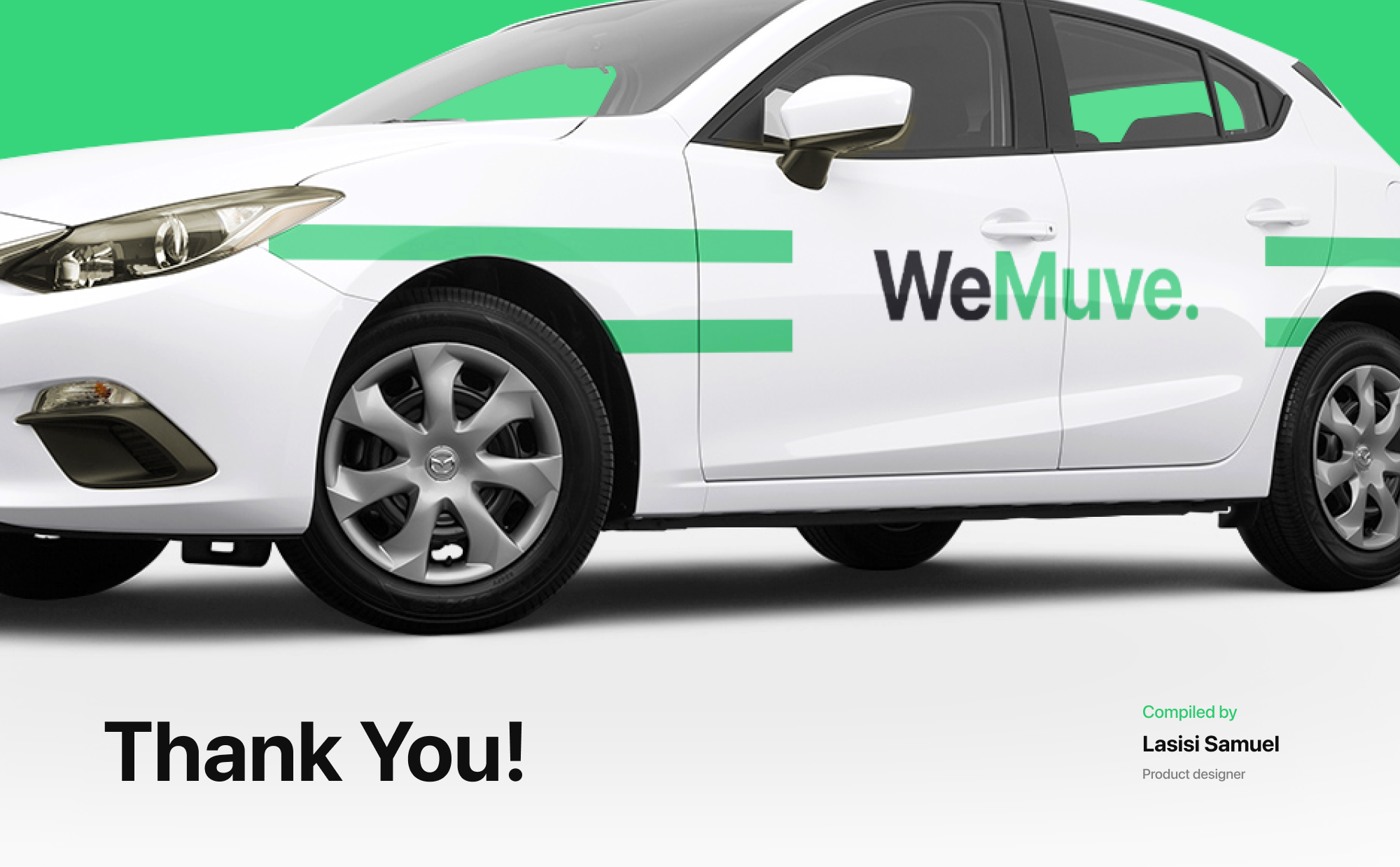
Verification badges for drivers plus surveys and driver history: users relaxed when they could see driver info and reviews before committing to a ride. An SOS button and in-ride trip sharing addressed safety concerns. Branded vehicles helped build public trust in the platform.
Final solution features
01
You are in control!
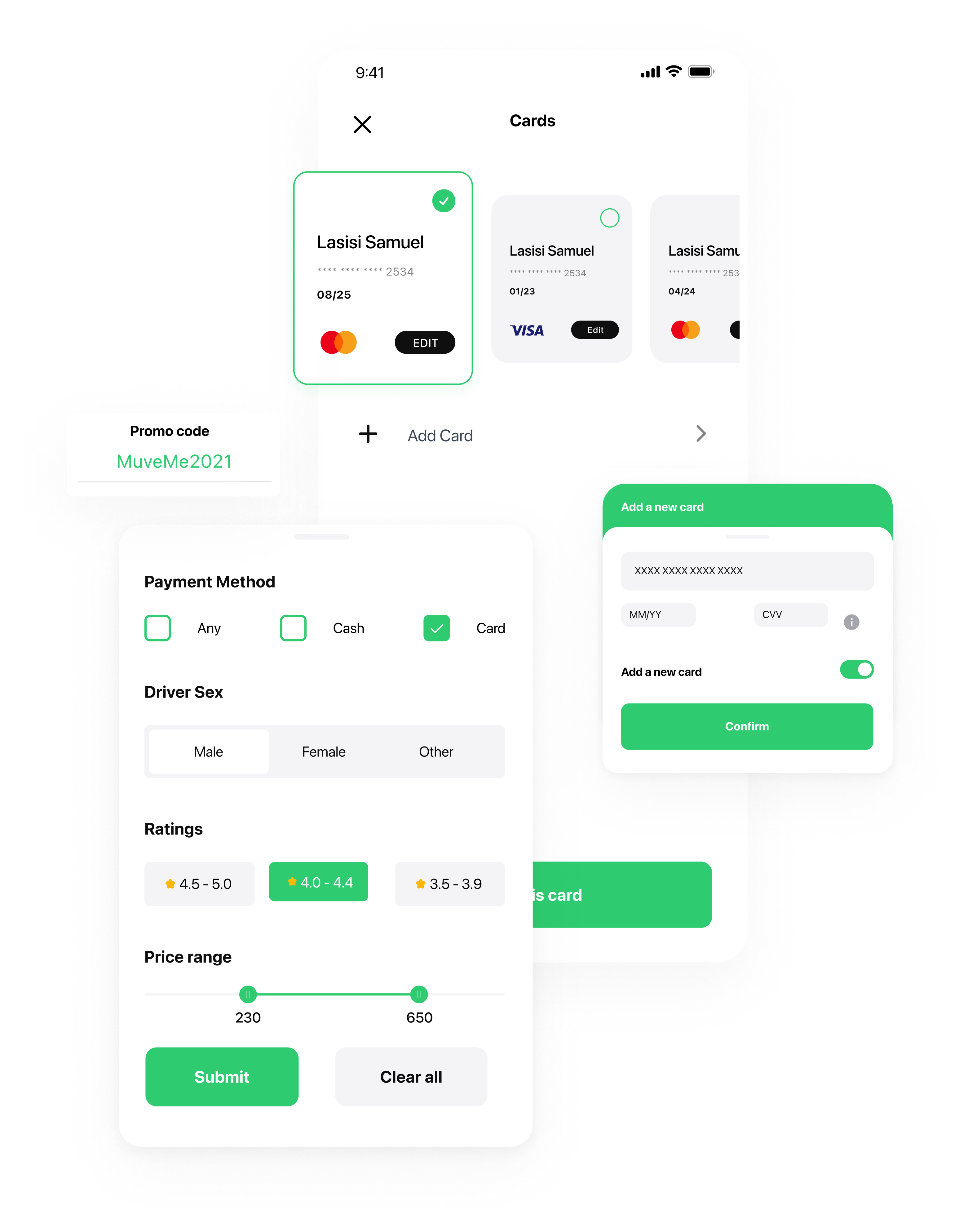
Filter available drivers, view ratings and reviews, and sort by payment method, driver sex, waiting time, ratings, price range, or seats available.
02
Safety first
Share trip progress in real time. The SOS button alerts security and emergency services when something goes wrong.
03
Flexible payments
Cash only, card only, or both. Promo codes can be applied at payment for cheaper trips.
Stage 04
Restructure: a marketing site to drive waitlist growth
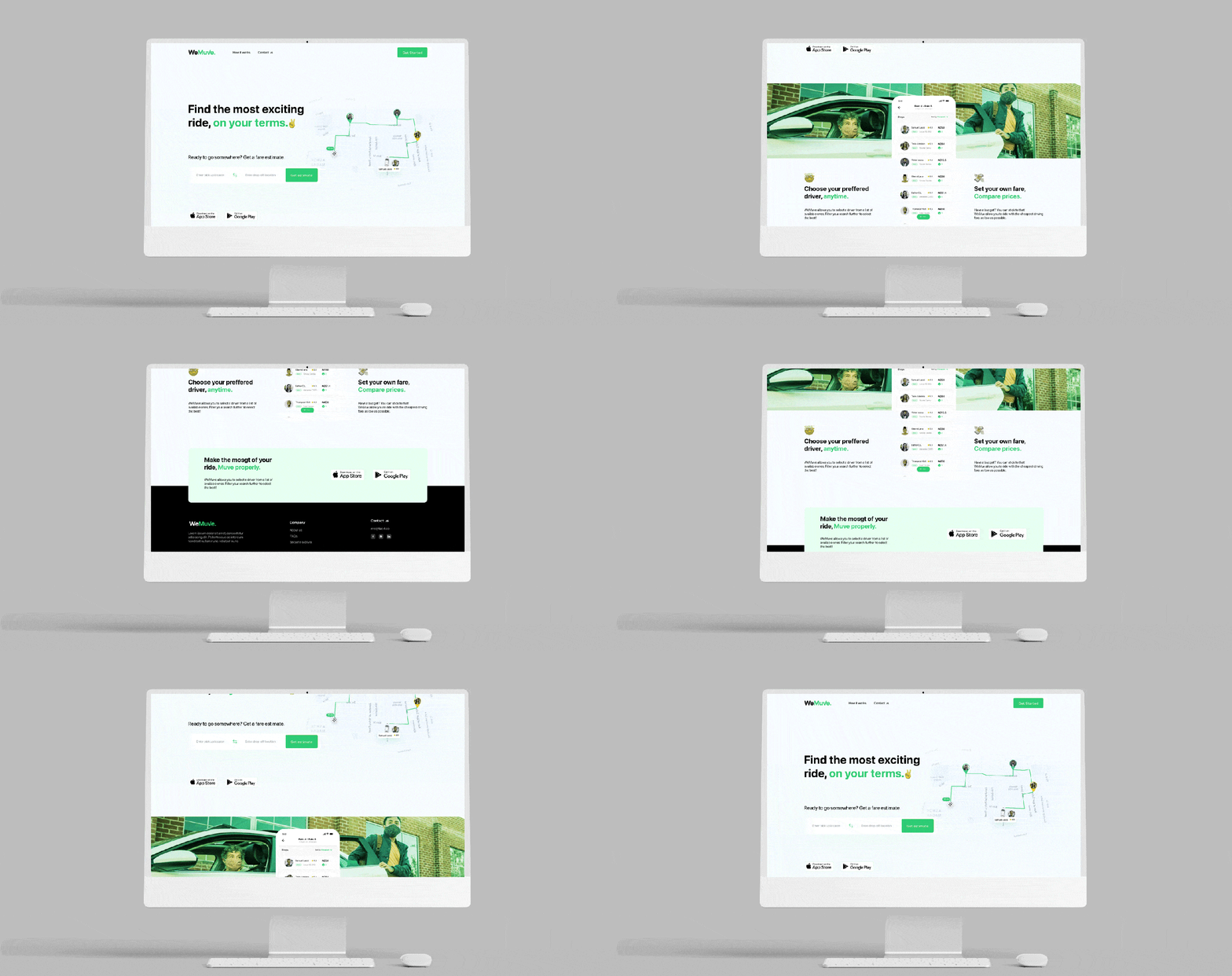
A one-page marketing website designed to communicate the WeMuve value proposition, key features, and drive conversions from waitlist signups.
Impact
Design impact, learnings and future thinking
Driver availability is the main challenge going into launch, around 70% of survey respondents said they had never picked up a passenger for cash, though 63% would be willing to share a ride. Branded vehicles with assigned drivers make sense as an early-stage strategy while the network grows.
Future thinking and learnings
Where WeMuve goes next and what shaped my thinking.
Solve the supply side
The 'Giving a ride' driver epic with income and trips dashboard is the next unlock for organic driver growth.
Safety as a product principle
SOS, trip sharing and verification aren't features, they're the reason users try the app at all.
Research beats aesthetics
No amount of visual polish beats an insight from the right conversation. Talk to users first.
Study the traffic effect
Deeper research into carpooling's real impact on Lagos congestion would strengthen the case for city-level partnerships.


